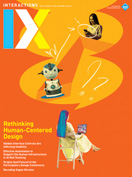



As emerging Web technologies fuel the rise of so-called social media (think YouTube, MySpace, and Twitter), the practice of interaction design is evolving from its roots in human-computer interfaces to address a broader range of human-to-human activities. Designers who once trafficked in task analysis and usability heuristics now frequently grapple with subtler, “squishier” modes of interaction: negotiating social relationships, building communities, working with issues of trust and identity. From the proliferation of blogs to Facebook, intranets to the endless stream of “crowdsourcing” applications, modern software design seems less predicated on how people interact with computers, and instead focuses more on how people interact with each other …
Click to read or download the entire article in the ACM Digital Library (Subscription Required - Learn more)


Ed -
It certainly will, and will be linked directly from this page. Richard and I are new, so we are still working out the logistics of how and when things happen, but as we better understand the process, we will try to make things happen faster and in an “anticipatory” fashion.
Thanks,
Jon
Will this article (and others) be available in the ACM digital library (the latest issue is Nov/Dec 2007)?
[…] Primal Interactions by Alex Wright, information architect at the New York Times; […]